
Working in Taiwan without Mandarin sounds manageable at first. Many OFWs arrive thinking English, hand signals, or help from friends will be enough. But after a few weeks, the reality sets in. Daily life, work instructions, clinic visits, and government errands all rely heavily on Mandarin. For many Filipinos, working in Taiwan without Mandarin becomes one of the biggest challenges of staying long term.
This guide breaks down the hardest situations, the real risks, and practical ways OFWs cope and grow.
Why Language Matters More Than You Expect
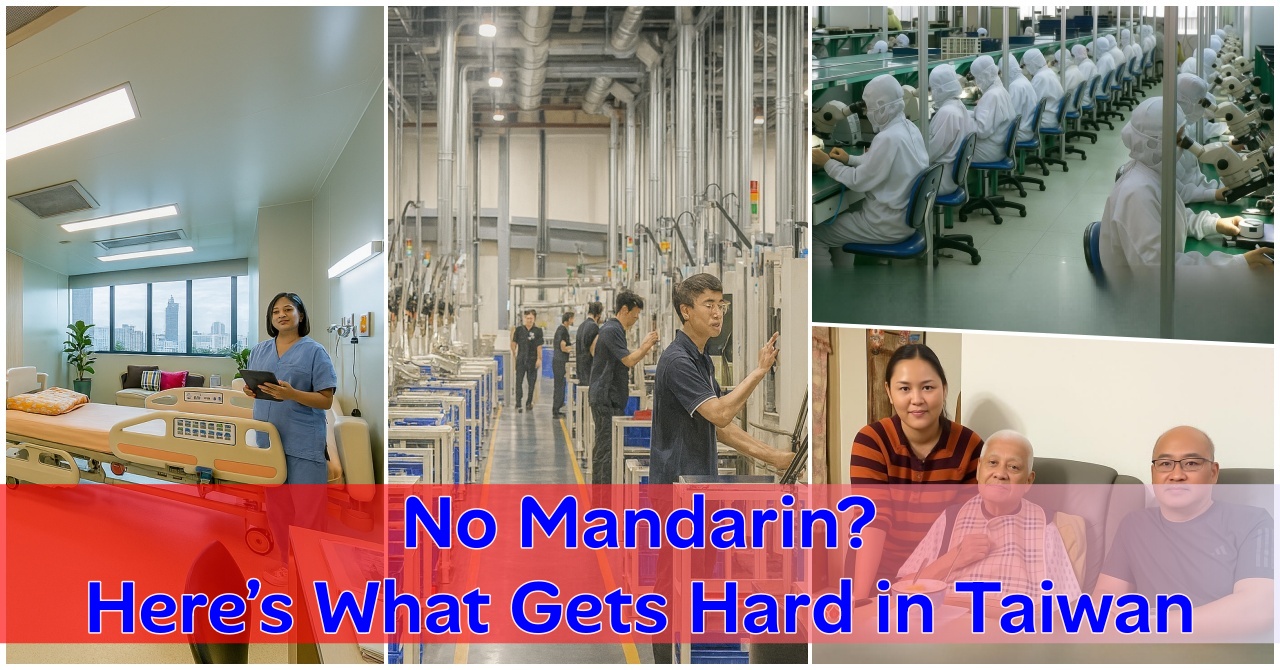
Taiwan hosts thousands of Filipino workers, mostly in factories, caregiving, and domestic work. These jobs involve close daily interaction with locals who often do not speak English. While English appears in tech offices or universities, it rarely shows up on factory floors, clinics, police stations, or neighborhood stores.
Language gaps do not just cause inconvenience. They affect safety, health, job security, and mental well being.
Workplace Challenges When You Do Not Speak Mandarin
1. Factory Instructions and Safety Rules
Many OFWs first struggle with instructions. Safety briefings, machine rules, and warning signs are almost always in Mandarin.
- You may miss a step in operating a machine.
- You may not understand safety warnings.
- Mistakes can lead to injury or penalties.
Even simple words like stop, danger, or maintenance matter when accidents can happen fast.
2. Miscommunication With Supervisors
Supervisors usually give instructions quickly and expect workers to understand.
- Asking questions feels hard or embarrassing.
- Errors may be seen as carelessness instead of misunderstanding.
- Disciplinary action can follow.
For OFWs, this can feel unfair, especially when effort is high but language is the real barrier.
3. Feeling Left Out at Work
Workplace bonding often happens through casual talk.
- Co workers chat in Mandarin during breaks.
- Jokes and updates get missed.
- OFWs may feel invisible even in a full room.
Over time, this isolation can affect confidence and morale.
Healthcare and Emergencies Without Mandarin
1. Explaining Symptoms Clearly
Doctors and nurses usually speak Mandarin.
- Describing pain becomes guesswork.
- You may not know how to explain when symptoms started.
- Important details can get lost.
In healthcare, unclear words can delay correct treatment.
2. Reading Prescriptions and Instructions
Prescription labels are rarely translated.
- Dosage instructions are in Mandarin.
- Warnings may be missed.
- Mistakes can lead to side effects or poor recovery.
Some OFWs rely on friends or Google Translate, but this is not always reliable.
3. Emergency Situations
Calling an emergency hotline is stressful even in your own country.
- Emergency operators speak Mandarin.
- Explaining location and situation becomes difficult.
- Panic increases when words fail.
This is one of the most serious risks of working in Taiwan without Mandarin.
Daily Transactions That Become Harder
1. Shopping and Eating Out
Menus, food labels, and cashier questions are usually in Mandarin.
- You may buy the wrong item.
- Dietary needs are hard to explain.
- Simple questions turn into awkward moments.
Many OFWs stick to familiar stores to avoid stress.
2. Transportation Outside Big Cities
In Taipei, English signs are more common. Outside the city, it changes fast.
- Bus routes are written in Mandarin.
- Ticket machines can be confusing.
- Asking for directions becomes difficult.
Missed stops and wrong routes happen often for new arrivals.
3. Banking and Bills
Banks and utilities use formal Mandarin.
- Contracts are hard to understand.
- Bills arrive without explanation.
- Clarifying errors requires speaking to staff.
Financial mistakes can follow when details are unclear.
Government and Legal Matters
1. Visa and Labor Processes
Most government forms are in Mandarin.
- Renewal steps are not clear.
- Labor rights information is hard to access.
- OFWs depend heavily on agencies.
This dependence can be risky if information is incomplete or delayed.
2. Police Reports and Complaints
Reporting an incident without Mandarin is extremely difficult.
- Explaining what happened takes time.
- Legal terms are confusing.
- OFWs often give up filing reports.
This can discourage workers from protecting their rights.
3. Employment Contracts
Contracts are usually written in Mandarin.
- Terms may be misunderstood.
- Overtime rules may not be clear.
- Penalties may be hidden in text.
Signing without full understanding puts OFWs at risk.
Real Risks of Living Without Mandarin
Working in Taiwan without Mandarin affects more than daily comfort.
- Isolation: Staying only within Filipino circles limits growth.
- Dependence: Relying on translators slows decisions.
- Career limits: Promotions often require basic Mandarin.
- Mental health strain: Frustration and loneliness build over time.
These are not signs of weakness. They are normal reactions to constant language pressure.
Practical Coping Strategies That Actually Help
Learn Survival Mandarin First
You do not need perfect grammar.
Focus on:
- Workplace words
- Medical terms
- Directions and numbers
Even small progress builds confidence fast.
Use Translation Apps Wisely
Apps help with quick checks.
- Translate signs and menus
- Prepare phrases before appointments
- Double check important terms
Do not rely on them alone for legal or medical decisions.
Find Bilingual Support Groups
Many churches, NGOs, and Filipino groups help newcomers.
- Some offer free language help
- Others assist with hospital visits
- Community support reduces stress
Choose Urban Areas When Possible
Cities like Taipei offer:
- More English signs
- Bilingual hospital staff
- Support services for foreigners
Urban living can ease the transition.
Frequently Asked Questions
- Can I survive in Taiwan with only English?
Yes, but daily life will be stressful. English works in limited settings, not everyday needs.
- Is Mandarin required for all jobs?
Not officially, but it helps greatly in factories, caregiving, and daily life.
- How long does it take to learn basic Mandarin?
Many OFWs manage survival Mandarin in three to six months with daily practice.
- Are there free resources for OFWs?
Yes. Churches, NGOs, and online groups often provide free help.
Final Thoughts
Working in Taiwan without Mandarin is possible, but it comes with real challenges. Language affects safety, health, work, and peace of mind. The good news is this. Mandarin is learnable. Step by step, word by word, it opens doors.
If you are planning a long stay, treat language learning as an investment in yourself.