
Working abroad comes with many expectations. Some are hopeful. Others are shaped by fear or stories passed around in group chats. The truth sits somewhere in between.
Workplace experiences for Filipino workers in Taiwan vary widely. They depend on the industry, the employer, the work system, and the support available. No single story represents everyone.
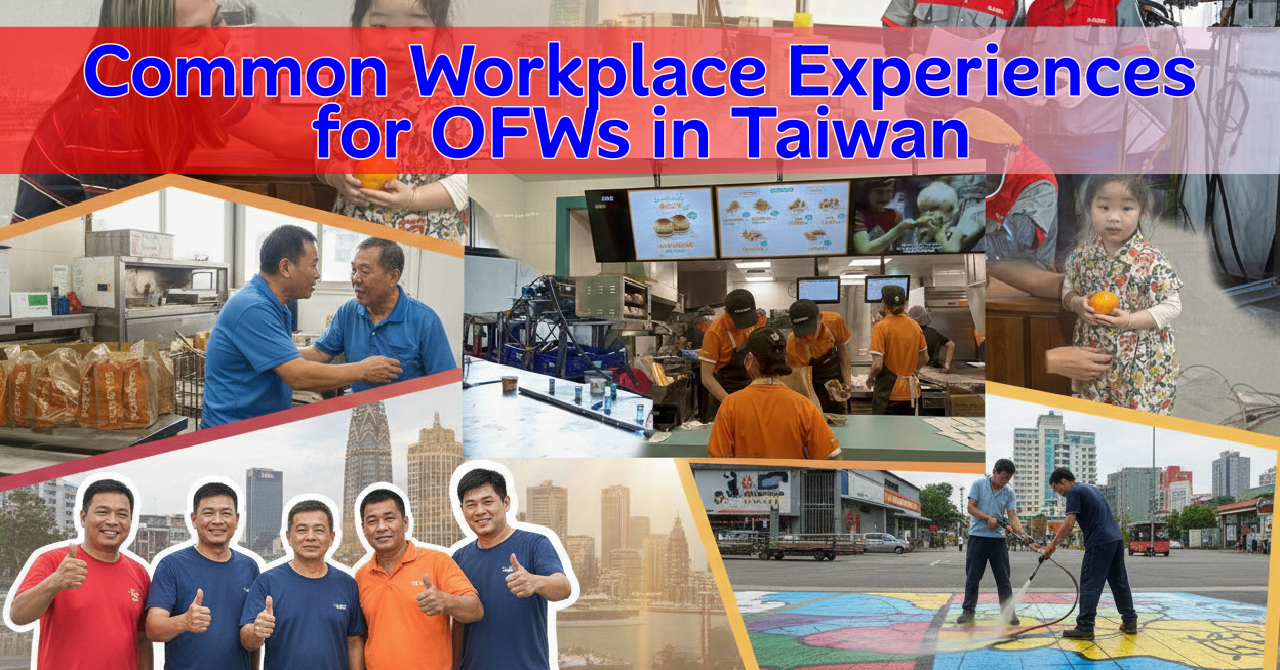
That said, let us take a closer look at common workplace scenarios across major sectors, showing both positive and challenging realities without exaggeration or blame.
Home-Based Caregiving (Elderly or Persons With Disabilities)
Home-based caregiving is deeply personal work. The experience often depends on family dynamics and expectations.
Positive Scenarios
Some caregivers are treated with respect and trust. Employers:
- Share meals with the worker
- Provide clear routines and schedules
- Allow rest when the patient is asleep
- Communicate calmly and respectfully
In these homes, caregivers feel included and emotionally supported.
Challenging Scenarios
Other situations are more demanding:
- Being on call almost 24 hours a day
- Family members giving conflicting instructions
- Emotional strain from caring for patients with dementia
- Limited privacy or personal space
Care work can be rewarding, but it can also be mentally and emotionally heavy, especially without clear boundaries.
Factory Work (Electronics, Semiconductors, Food Processing)
Factories employ a large number of Filipino workers and often operate on strict systems.
Positive Scenarios
In well-managed factories, workers experience:
- Structured shifts with fixed break times
- Overtime that is voluntary and paid correctly
- Clear safety rules and proper protective equipment
- Supervisors who provide training
Predictability helps many workers plan their time and finances.
Challenging Scenarios
During peak seasons, pressure increases:
- Long hours to meet production quotas
- Strict rules on phone or bathroom use
- Language barriers with supervisors or coworkers
- Repetitive tasks causing physical strain
Factory work is stable for many, but it can be physically demanding over time.
Fisheries
Fishing work often takes place far from shore, with limited oversight.
Positive Scenarios
Some crews develop strong teamwork:
- Tasks and meals are shared
- Bonuses from good catches are distributed fairly
- Crew members support each other during long trips
In these cases, trust and cooperation are essential.
Challenging Scenarios
However, risks are higher:
- Harsh weather and physically exhausting work
- Long periods at sea with little communication
- Strong power imbalance between captain and crew
- Reports of delayed wages or unclear contracts
Isolation makes fisheries work one of the most vulnerable sectors.
Cleaning and Janitorial Work
Cleaning work is common in offices, malls, schools, and public spaces.
Positive Scenarios
Many workers benefit from:
- Predictable schedules
- Fixed locations
- Employers who provide proper tools and protective gear
Routine and structure make this role manageable for long-term work.
Challenging Scenarios
Challenges appear when:
- Multiple sites are assigned in one day
- Travel time between locations is unpaid
- Workload increases during holidays or events
- Supervisors closely monitor performance
Physical fatigue is common, especially during peak periods.
Childcare (Nannies and Babysitters)
Childcare involves emotional connection and responsibility.
Positive Scenarios
Supportive families:
- Respect rest days
- Set clear boundaries
- Communicate routines clearly
- Build positive relationships between children and caregiver
When trust develops, the work feels meaningful.
Challenging Scenarios
Difficulties arise when:
- Caregivers are expected to handle childcare, cooking, and cleaning
- Discipline rules are unclear
- Emotional labor increases due to children’s behavior
Unclear expectations often lead to stress and misunderstandings.
Hospitality (Hotels, Hostels, Restaurants)
Hospitality work is fast-paced and customer-facing.
Positive Scenarios
In healthy environments:
- Roles are clearly defined
- Teams support each other
- Workers gain new skills in service, kitchen prep, or housekeeping
Some workers enjoy the variety and learning opportunities.
Challenging Scenarios
Pressure builds during:
- Peak dining or check-in hours
- Busy tourist seasons
- Split shifts that stretch the workday
- Encounters with demanding customers
Emotional control becomes part of the job.
Technical and Skilled Work
Skilled roles require training and precision.
Positive Scenarios
Many skilled workers experience:
- Higher pay
- Structured training
- Respect for technical ability
Skill-based work often offers better long-term stability.
Challenging Scenarios
The pressure is also higher:
- Tight tolerances and precision requirements
- Safety risks if equipment is outdated
- Communication gaps with engineers or supervisors
Mistakes carry more consequences in technical roles.
What These Workplace Scenarios Reveal
Across all industries, several truths stand out.
- Experiences vary widely
- Industry systems shape daily life more than nationality
- Support networks matter
- Awareness of rights changes outcomes
Kindness and rudeness exist everywhere. What protects workers is structure, clarity, and access to help.
Why This Perspective Matters
Oversimplified stories harm workers. Saying all employers are kind is untrue. Saying all employers are abusive is also untrue.
Understanding the range of real experiences helps workers:
- Set realistic expectations
- Ask better questions before deployment
- Recognize when a situation is normal or concerning
Knowledge is protection.
Frequently Asked Questions
- Is one industry always better than others?
No. Each sector has strengths and risks. The employer and system matter more than the job title. - Do positive workplaces exist?
Yes. Many OFWs report fair treatment and supportive environments. - What helps workers handle challenges better?
Clear contracts, communication, rights awareness, and strong community support.
Final Thoughts
Working abroad is never one story.
Some days are steady. Some are hard. Most fall somewhere in between. What matters is recognizing patterns, understanding systems, and knowing where support exists.
Real protection comes not from promises, but from awareness, preparation, and collective understanding.